
5 Benefits of Rubber Gym Flooring
When it comes to building or upgrading a fitness facility, rubber gym flooring is an excellent choice for a wide range of spaces. From school weight rooms to commercial gyms and athletic training centers, rubber flooring delivers the performance, safety, and durability today’s facilities need.
Let’s break down some of the biggest benefits of rubber gym flooring that make it such a popular option, and it’s a smart investment for high-use athletic environments.
1. Unmatched Durability for High-Impact Spaces
One of the biggest advantages of athletic rubber surfacing is its exceptional durability. Rubber is engineered to withstand dropped weights, constant foot traffic, and heavy fitness equipment without cracking or compressing over time.
For weight room flooring and other high-impact gym floors, this durability translates into fewer repairs, longer life cycles, and reduced long-term costs.
2. Athlete Safety: Shock Absorption and Slip Resistance
The safety of the athletes in your facility is always a top priority, and rubber flooring delivers on that front. Its built-in shock absorption helps reduce joint strain and fatigue, especially during high-intensity training and strength workouts. At the same time, rubber provides excellent slip resistance, even in areas exposed to sweat or moisture.
This combination creates a safer training environment for athletes of all levels while helping facility managers reduce the risk of injuries and liability concerns.
3. Noise Reduction for Busy Facilities
In bustling weight rooms and multi-use gyms, dropped weights and constant movement can create excessive noise. Rubber naturally dampens sound and vibration, helping control noise levels and create a more comfortable environment for athletes, coaches, and adjacent spaces such as classrooms or offices.
4. Low Maintenance and Hygienic Performance
Modern rubber gym flooring is designed for easy upkeep. It resists moisture (meaning you won’t have to worry about the impact of water damage), it doesn’t trap dust, and it can be cleaned quickly with routine maintenance. Many durable rubber gym floors also incorporate antimicrobial properties, helping support a cleaner, healthier training environment with minimal downtime or labor.
5. Customization That Reflects Your Brand
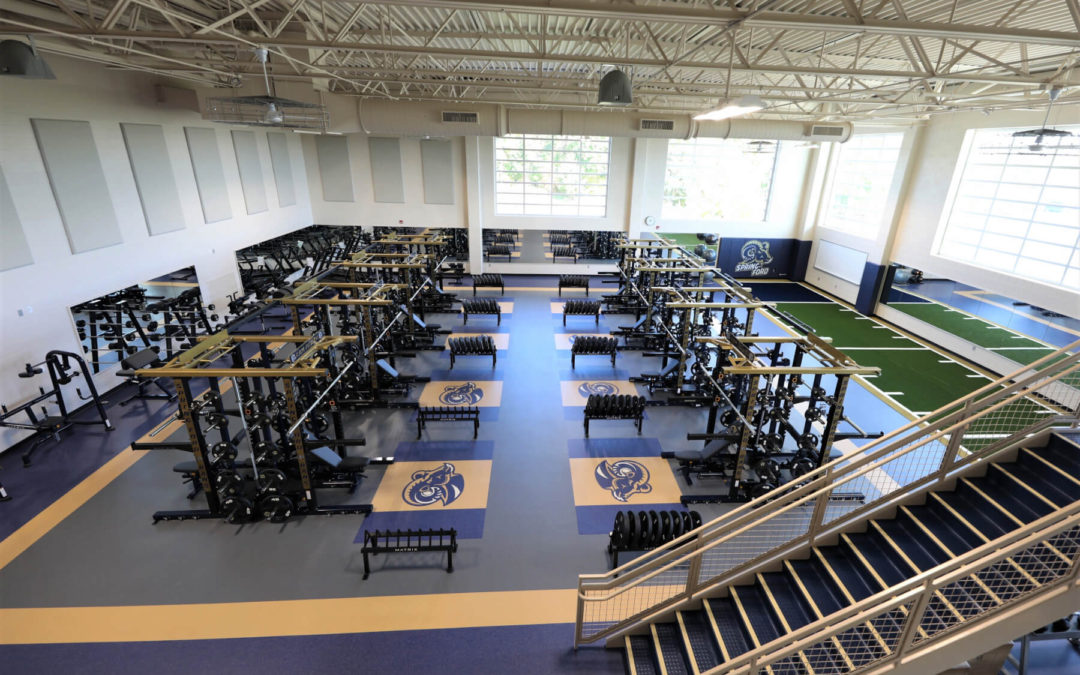
Beyond performance, rubber flooring offers impressive design flexibility. Facilities can incorporate custom colors, school logos, and branding directly into the surface.
At Miller Sports, our custom artwork services allow athletic directors and facility managers to create a space that reflects their team identity while maintaining top-tier performance standards.
If you’re thinking about upgrading your gym floors, you’re comparing wood and rubber floors, or considering a new project, rubber flooring is a proven choice that delivers on performance, safety, and long-term value.
Miller Sports Construction has helped athletic directors, gym owners, and facility managers create durable, high-performing spaces that stand up to real-world use. Reach out to our team, and we’ll be happy to talk through your goals and help you find the right solution for your facility.
Rubber Gym Flooring FAQ
Have more questions about rubber gym floors? Miller Sports has answers.
Why is rubber flooring good for gyms?
Rubber flooring is a good choice for gyms because it is very durable, it’s safer than other kinds of flooring, it’s quiet, is easy to maintain, and it can be customized with your school colors, logos, and other branding.
How long do rubber gym floors last?
Rubber gym flooring usually lasts between 10 and 15 years. The usable lifespan of this kind of athletic flooring depends on how often it’s used and how well it’s maintained.
What are the drawbacks of rubber gym flooring?
A few of the downsides of rubber gym floors are the smell, the weight, and that they aren’t appropriate for every kind of athletic facility. But for many multi-use facilities, the benefits of rubber gym floors outweigh the drawbacks.