
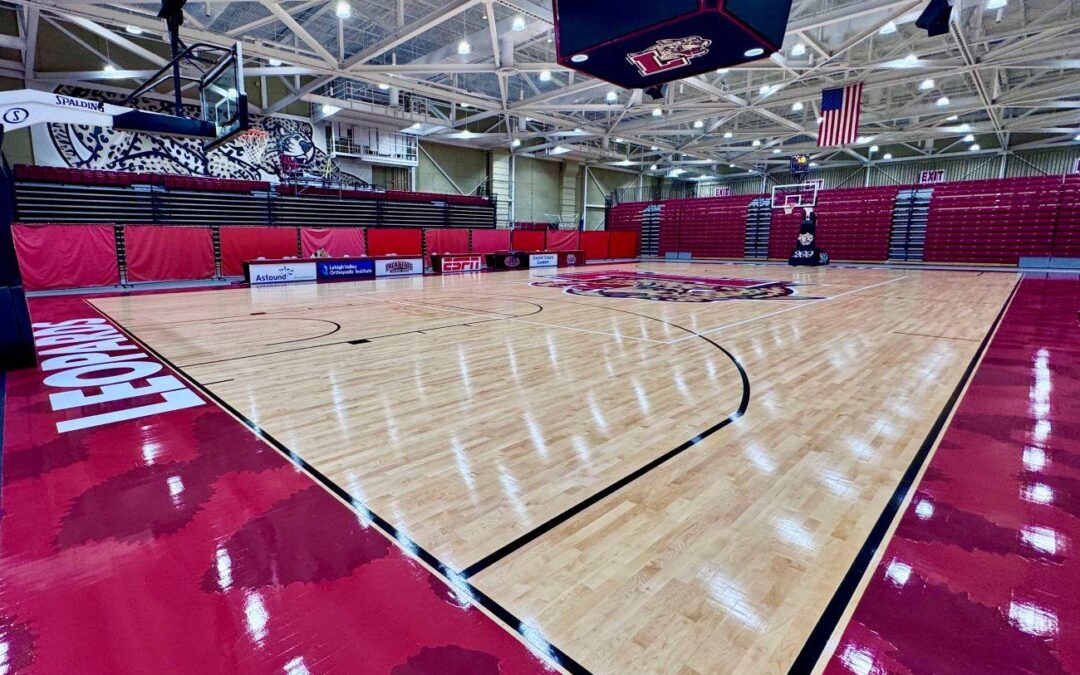
Gym Floor Line Painting: How the Professionals Do It Right
Every line on a gym floor serves a purpose. Accurate line painting shapes how a facility supports everything scheduled on that court throughout the year.
Line painting is one of the most important steps in the gym floor refinishing process. The precision applied here carries through the life of the floor, and a well-executed layout reflects the quality of the facility as a whole.
Here’s how the professionals approach gym floor line painting to deliver results that hold up season after season.
Why Accurate Gym Floor Painting Matters for Athletic Facilities
Gym floor painting is functional infrastructure, and the standards it has to meet are precise. Governing bodies like the NFHS and NCAA set dimensional requirements for every marking on the court. Facilities that fall outside those specifications risk non-compliance during inspections, officiating disputes during games, and liability exposure when athlete safety is called into question
Professional line painting keeps your floor within those standards.
Multi-sport facilities add another layer of complexity. Color-coded line systems give athletes and officials an intuitive read of the court no matter what sport is being played, allowing multiple sports to share one surface without confusion.
Well-executed line work improves the experience of everyone in the building:
- Sharp lines and well-placed graphics signal a serious athletic space
- Thoughtful court design reinforces facility identity and sets the tone for competition
- Athletes perform better in an environment that reflects the level of play expected of them
When all of that comes together, the floor becomes part of what makes your facility worth showing up to.
Meeting Sport-Specific Line Standards
Every sport played on a hardwood court comes with its own set of line requirements:
- Basketball (NFHS): 2-inch boundary and lane lines, with specific arc, free throw, and center circle dimensions for high school play.
- Basketball (NCAA): Adjusted arc distances and lane configurations that differ from NFHS standards.
- Volleyball: Boundary and attack lines at prescribed distances from the centerline, typically 2 inches wide.
- Pickleball: Kitchen lines, non-volley zone markings, and boundaries that must be offset from existing court lines to remain readable.
A few details are worth considering when planning a multi-sport layout:
- Line widths, arc radii, and boundary dimensions vary by sport and level of play.
- Governing body specifications are updated periodically, sometimes between seasons.
- Color assignments need to be planned to avoid visual conflicts when layouts overlap.
Working with an experienced contractor means your facility stays current without having to track every revision in-house.
Supporting Multi-Sport Facilities With Color-Coded Lines
When multiple sports share a single surface, color-coded line systems keep everything organized and readable. Common multi-sport combinations include:
- Basketball + Volleyball: Basketball gym floor painting in a primary color, with volleyball boundaries in a contrasting color.
- Basketball + Pickleball: Color-divided lines keep pickleball kitchen lines and non-volley zones separate from basketball boundaries.
- Basketball + Volleyball + Pickleball: A three-sport layout with a distinct color assigned to each sport.
A well-planned system lets a single court serve an entire athletic program without sacrificing clarity for any sport.
How Professionals Approach Gym Floor Painting: A Step-by-Step Overview
Every gym floor painting project has its own variables, but the process that produces a long-lasting result is consistent. Here’s how we do it at Miller Sports.
1. Floor Assessment and Preparation
Before any paint touches the floor, Miller Sports Construction evaluates the surface and addresses anything that could affect the outcome:
- Scratches and surface wear
- Moisture damage
- Lifted or damaged boards
- Existing finish type and compatibility with new products
Skipping this step is what causes lines to peel or look uneven down the road, which is why floor assessment is a core part of Miller Sports Construction’s end-to-end process.
2. Measuring and Layout
Layout happens before applying any paint. String lines and tape map the full court, confirming every measurement against sport-specific standards. Small errors here become visible problems once the paint is down.
3. Applying the Paint
Paint application technique varies depending on the product and floor condition. The details that determine a clean result include:
- First coat thickness and even application
- Drying time between coats
- Second coat coverage
- Tool selection: rollers, brushes, or line stripers
The installer’s knowledge and skill determine the outcome as much as the product itself.
4. Finishing and Final Check
Once the paint is down, the draft layout is removed, imperfections are touched up, and a clear coat is applied where required. We conduct a final walkthrough to confirm the work meets specifications and professional-grade standards.
Custom Artwork and Logos
Court lines are just the starting point. Custom graphics bring a facility’s identity onto the floor, and Miller Sports Construction works directly with clients to design and execute artwork that reflects their program.
Common custom elements include:
- School or program logos at center court
- Mascots and wordmarks
- Custom color fills and border treatments
- Lettering and branding integrated alongside game lines
Every design is developed before work begins, whether it’s a new indoor basketball court installation or a full refinish, so the finished floor reflects the facility’s identity as accurately as it meets sport-specific standards.
Ready to Paint Your Gym Floor?
Miller Sports has served the East Coast for more than 35 years. In that time, we’ve designed, installed, and maintained school and athletic facilities, including the flooring. We’ve helped athletic programs look and play better with beautiful, safe courts and fields.
When your facility is ready for professional gym floor line painting, our team is ready to make it happen. Get a quote and start the conversation today.
Gym Floor Line Painting FAQ
Have questions about gym floor line painting? Miller Sports has answers.
What kind of paint is used on gym floors?
Gym floors require specialized court paint or floor finish, typically water-based polyurethane or oil-modified urethane. Standard paint products are not appropriate for hardwood court surfaces. Product selection depends on the floor type and the condition of the existing finish, which is why professional assessment before any painting work begins is important.
What’s a safe alternative for creating temporary gym floor markings?
Water-soluble tempera paint or white shoe polish are the safest options for temporary markings on hardwood gym floors. Avoid tape entirely. Painter’s tape and masking tape can pull the finish off the surface, turning a temporary marking into a repair job that may require full refinishing.
How much does it cost to paint a gym floor?
Every facility is different, so it’s difficult to give an estimate without knowing all of the factors that can impact the cost. Pricing will vary based on:
- Floor size
- Number of lines and configurations
- Current floor condition
- Whether custom artwork or logos are included