
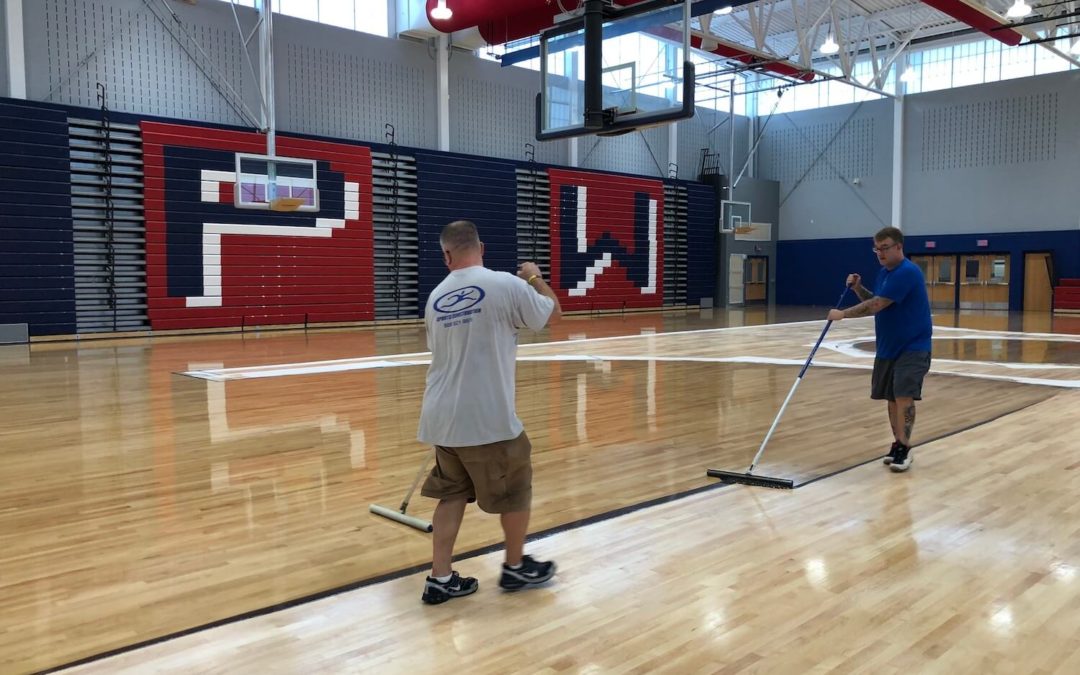
A well-maintained gym floor protects athletes, extends the lifespan of your floors, and enhances safety. But when your hardwood floors start showing wear and tear, the question arises: Should you sand and refinish your gym floor, or screen and coat it? Understanding the difference can help you make the right call and save thousands in long-term maintenance or gym floor replacement costs.
What Is a Screen and Coat?
A wood floor screen and recoat is a maintenance process that lightly abrades the top layer of your gym floor’s finish before applying a new coat of polyurethane. This method refreshes the shine, protects the wood, and seals minor scuffs without removing paint or logos.
A water-based screen and coat finish typically takes 1-2 days to cure, and an oil-based screen and coat finish can take up to 7 days to cure.
Depending on how frequently your floors are used, we recommend getting this service completed every 1-2 years.
Screen and Coat is best for:
- Minor wear and scratches
- Floors that still have a good finish layer
- Schools that want to maintain a consistent appearance year-round
A screen and coat is the equivalent of giving your gym floor a “tune-up.” It keeps the floor looking new and prevents damage from reaching the wood itself.
What Is Gym Floor Sanding and Refinishing?
A full sanding and refinishing removes the entire finish, paint, and line markings, down to the bare wood. Refinishing or resurfacing gym floors is a major restoration process that essentially gives you a brand-new gym floor surface.
It typically takes 7-10 days to complete, and depending on your maintenance, we recommend this service every 8-10 years.
Sand and Finish is best for:
- Deep scratches, worn finish, or exposed wood
- Floors with peeling paint or faded logos
- Water damage or uneven appearance
A full gym floor sanding resets your floor’s condition so that you can update game lines, refinish with eco-friendly coatings, or update your design.
How to Decide Which Is Right for Your Facility
If your gym floor still looks good but has dulled over time, a screen and coat is likely what you need. However, if you notice flaking paint, exposed boards, or uneven sheen, then you might need a complete sanding and refinishing.
A good rule of thumb: For every 8–10 screen and coat cycles, plan for a sanding. This schedule helps most schools keep their gym floors in top condition for 30+ years.
Maintenance Tip: Keep a regular maintenance schedule
If you want to extend your gym floor’s life, make sure to keep up with regular maintenance. Even small steps like daily dust mopping and annual screening can prevent costly repairs later.
Facilities that follow a regular maintenance schedule can reduce long-term flooring costs by up to 30%, compared to reactive repairs (MFMA).
Partner with Experts Who Know Gym Floor Sanding
Choosing between a screen and coat and a full gym floor sanding comes down to the current condition of your floor and your long-term facility goals.
At Miller Sports, our team has 35+ years of experience installing, sanding, and maintaining hardwood gym floors in schools, universities, and athletic centers. We’ll evaluate your gym’s surface and recommend the best, most cost-effective approach so that your athletes always play on safe, high-performing floors.
Contact Miller Sports today to schedule a gym floor evaluation or maintenance consultation.