
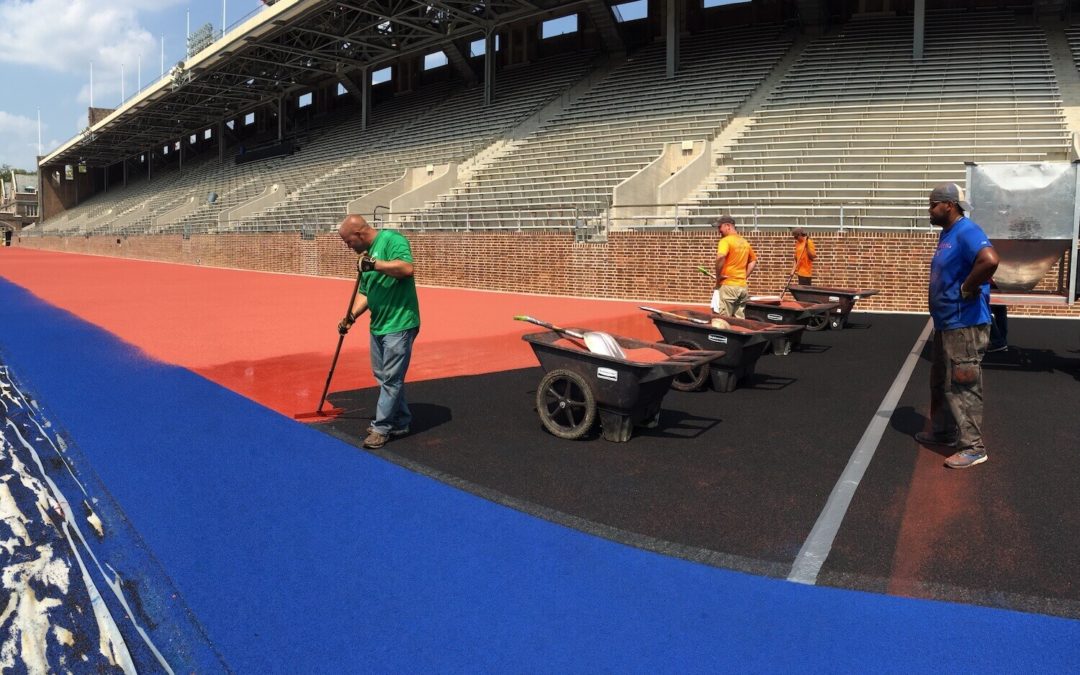
Signs Your School Needs Running Track Surface Repairs or Replacement
Your school’s running track is more important than you might realize. It’s where athletes train, where teams warm up, where your student athletes compete, and it’s where students stay active during physical education classes. With all of that activity, even the most durable tracks are bound to wear down over time. Weather exposure, UV radiation, and heavy foot traffic gradually break down the surface, leading to cracks, hard spots, and puddling.
Knowing when to resurface or replace your running track is crucial for helping your students perform and stay safe. Delaying maintenance can result in higher repair costs and, more importantly, an increased risk of injury.
Understanding how long a track surface is designed to last, and what factors affect its lifespan, can help you make informed maintenance decisions before small problems grow.
Understanding Track Lifespan
At Miller Sports, we partner with globally trusted manufacturers to deliver high-quality track and rubber sports flooring systems. These quality rubber surfaces are engineered for durability, resilience, and minimal maintenance, even under heavy use.
But no surface lasts forever. When a track begins to lose elasticity, develops cracks, or shows consistent wear patterns, resurfacing is often the most effective and cost-efficient way to restore performance and safety. Recognizing these warning signs early can help extend the life of your track and avoid the need for full running track replacement.
If you want to know how to maintain your track and extend its lifespan, follow this track maintenance guide. Make sure you’re keeping up on spring maintenance and winter maintenance to make your track last as long as possible.
Visible Signs You Need Running Track Surface Repairs and Resurfacing
You don’t need specialized equipment to identify early signs of surface failure. A thorough visual inspection is your first line of defense. After colder months or periods of heavy rainfall, walk the track and look for the following issues:
- Cracks, splits, or bubbling across the surface
- Uneven texture or slick-looking areas may mean the top layer has worn away
- Standing water or puddling can point to drainage or base problems
- Color fading or chalking is caused by UV exposure and oxidation
- Loose surface material
Once multiple warning signs appear, it’s time to take action. Addressing surface issues early through resurfacing is far more cost-effective than waiting until a full replacement becomes necessary.
When It’s Time for a Full Track Replacement
Even if you’ve made running track maintenance and resurfacing a priority, there are times when a full track replacement is the smarter long-term investment. For example, when the base layer has shifted, drainage is failing, or extensive surface damage has occurred, any repairs are likely to be temporary.
When you get to the point where running track surface repairs aren’t going to cut it, a replacement means you’ll get:
- Fresh substrate
- Improved slope and drainage
- New shock-absorbing layers
- Updated lane striping and markings
While more extensive, the result often delivers another 10-15+ years of high-level performance.
Partner with Miller Sports Construction
At Miller Sports, we specialize in running track resurfacing and repair for schools and universities. Our team assesses each facility’s condition, then we will recommend resurfacing or full replacement based on what we see. We stay current with the latest, top-performing products so we can recommend materials and systems that will work best for your school, budget, and athletes.
Contact Miller Sports to schedule an on-site track evaluation and get the expert insight your school’s facility deserves.