
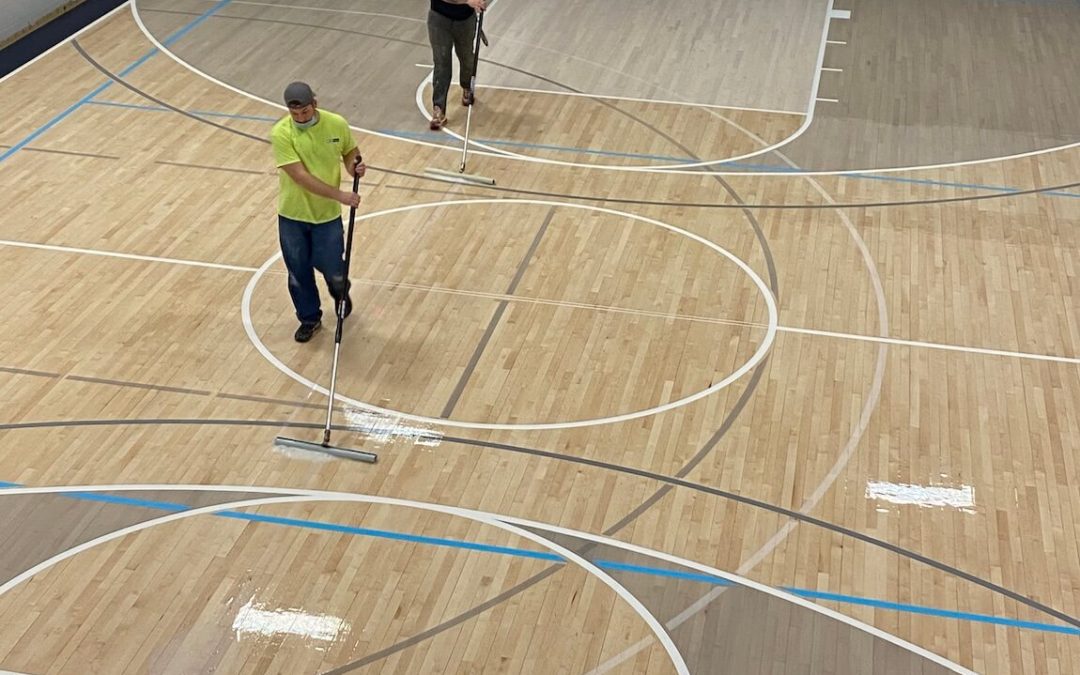
Discovering gym floor water damage at a school or university can be alarming. Whether it’s caused by a roof leak, HVAC issue, burst pipe, or flooding from nearby locker rooms, even minor water exposure can quickly compromise your hardwood flooring.
Don’t let your daily floor maintenance be in vain. Getting professional help quickly can make the difference between a minor repair and a full replacement, and can save you time and money.
Step 1: Identify the Source of the Water Damage
Before any repair can begin, it’s necessary to identify where the water came from. Common culprits include:
- Roof or window leaks
- Plumbing or sprinkler malfunctions
- Improper humidity control
- Standing water after storms
Even small leaks can cause wood to cup, crown, or buckle if left untreated. Facility managers should inspect not only the floor surface but also nearby walls, bleachers, and vents for hidden moisture.
Step 2: Assess the Extent of the Damage
Water-damaged gym floors can vary from mild surface issues to structural subfloor damage. Here’s how to gauge the situation:
- Light damage: Slight cupping or discoloration in small areas is repairable with localized drying and recoating).
- Moderate damage: Widespread cupping or peeling finishes may require partial board replacement and sanding.
- Severe damage: Warping, mold, or loose boards across large sections likely means a full replacement is needed.
Step 3: Begin the Drying and Repair Process
Once the source of water is controlled, drying should start immediately. Professional gym floor contractors, like the team here at Miller Sports, use industrial dehumidifiers, fans, and moisture meters to ensure the subfloor and boards reach a stable moisture level before any gym floor refinishing begins.
Typical repair steps may include:
- Moisture testing of the floor and subfloor
- Removal of damaged boards
- Replacement and blending of new wood sections
- Sanding and refinishing the entire surface
- Repainting game lines and applying a new finish
This thorough process restores the floor’s appearance and protects its long-term performance and safety for athletes.
Step 4: Prevent Future Gym Floor Water Damage
After repairs, facility managers should:
- Maintain proper HVAC controls to manage humidity
- Schedule regular inspections of roof drains and plumbing
- Use entry mats and floor covers during events to protect your floors
- Implement a gym floor maintenance plan with annual screenings and recoats
When You Should Call a Professional
If your wood gym floor shows buckling, mold, or soft spots, call a professional immediately. DIY drying, refinishing, or sanding can worsen the issue if moisture is still present beneath the surface.
Miller Sports specializes in school gym floor repairs. From minor gym floor water damage to full hardwood floor replacement, our team can handle it all. We can assess the extent of the issue, recommend the right repair plan, and restore your floor safely and efficiently.
Contact Miller Sports to schedule a gym floor inspection or learn more about our gym floor sanding and refinishing services.